
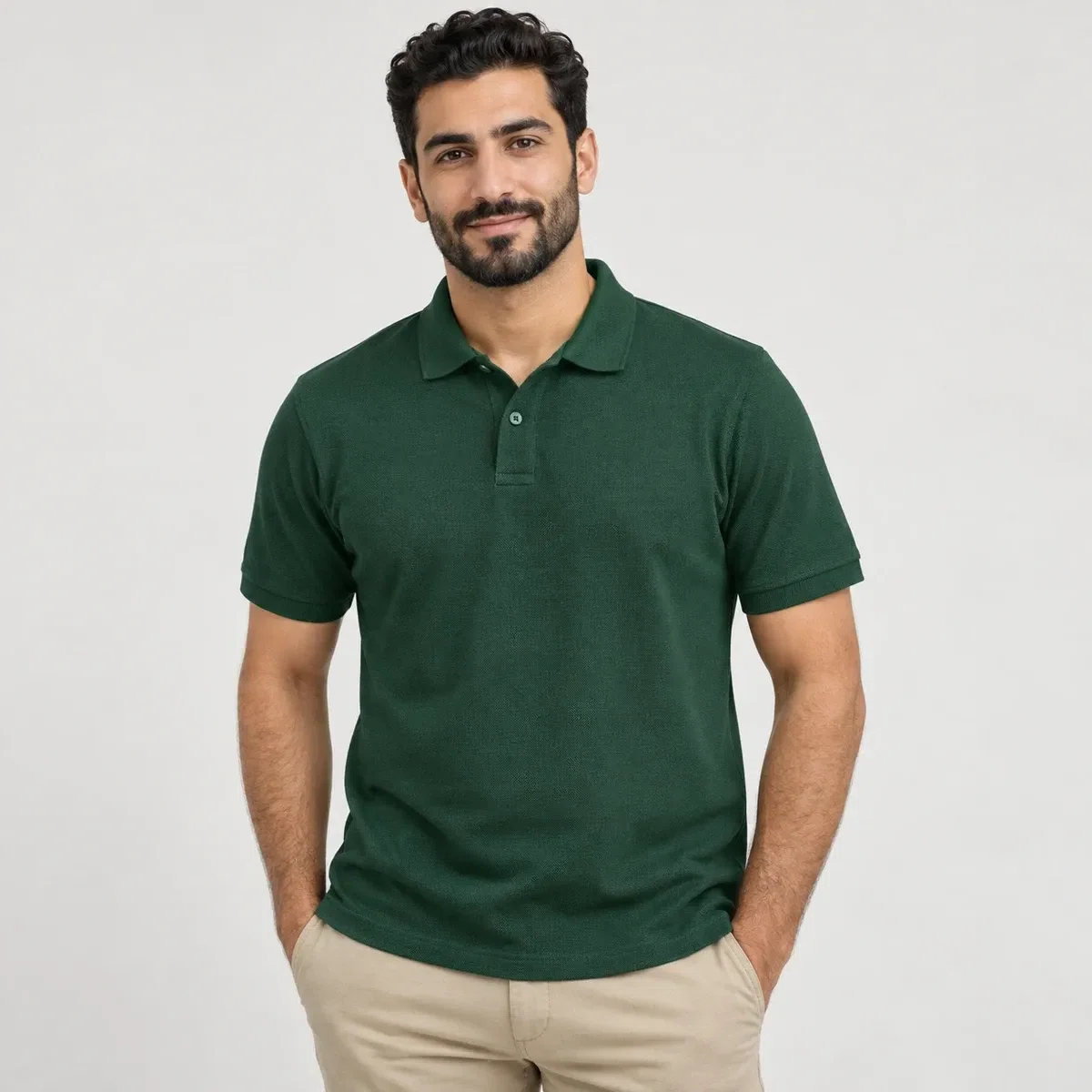
CVC Fabrics for Middle East Uniform Programmes
CVC commonly describes a cotton-rich blend, yet buyers should confirm the exact percentages instead of treating the label as a complete fabric specification. Middle East uniform programmes can compare this option when staff prefer a cotton-led feel alongside other purchasing requirements. This guide concentrates on knitted staffwear, collar behaviour and repeat shade coordination. Discuss the proposed construction, care label and garment sample with Masswear Uniform before selecting a fabric for your team or adding another department to the programme.
CVC appears in regional fabric catalogs as a cotton-rich blending option. The term does not identify one fixed ratio, knit or finish. For a staff polo programme, ask how the proposed cloth behaves in the body, collar and sleeve opening. These details can matter more to everyday presentation than a broad claim about the fibre combination.
Reviewing CVC For Cotton-Rich Staff Clothing Choices
Confirm What The Supplier Means
Ask the supplier to write the cotton and polyester percentages separately. Different cotton-rich options can carry the same category label, so your purchasing comparison needs the actual composition. Keep that information with the weight, construction and finish. Do not infer certification, shrinkage control or a particular performance claim from the abbreviation.
Compare the sample with any existing staff garment that employees already like. Ask what they value about it: surface feel, ease of movement, coverage or the way it looks after cleaning. Separate those observations from fibre identity. Your brief can then describe a preferred wearing experience without assuming every cloth in the category will produce it.
Inspect The Polo Beyond Its Body Fabric
A polo combines several elements that can change differently through wear and washing. Examine the collar, placket, cuffs and seams alongside the main knit. Ask staff to wear the proposed sample and note whether the collar sits comfortably or the sleeve opening restricts movement. Check the garment after its intended laundry routine before approving the complete design.
Surface texture can affect both airflow and logo appearance, but a knit name alone cannot establish those results. Review the fabric in the intended shade and size range. Check coverage over an underlayer and look for pulling across the chest. Choose the garment's ease and sleeve length with wearers, including anyone who prefers fuller coverage.
Use Product References To Define The Range
Consider custom polos for everyday staff clothing, button down shirts for office alternatives and women's blouses for coordinated corporate options. The pages provide garment starting points within the same industry. Confirm available fabric choices with Masswear Uniform rather than expecting a cotton-rich knit to suit every design.
A coordinated range can use different fabrics while retaining a shared shade and logo. Place the proposed polo beside the shirt or blouse under workplace lighting. Approve physical colour references rather than relying on a screen display. Also assess the embroidered or printed logo after cleaning, because its backing and application can affect the cloth.
Record The Trial Before Extending The Programme
Use a practical trial sheet with garment measurements, the proposed care instructions and staff comments. Record any collar distortion, twisting seams, surface changes or shade differences after washing. Agree what your team considers acceptable before ordering. A documented trial gives procurement a stronger basis than a promise that a blend automatically combines every benefit of both fibres.
Provide the destination, staff roles, quantity, size distribution and artwork with your enquiry. Describe how the team cleans its clothing and whether it works mainly indoors or moves outside. Ask for order-specific availability and scheduling. Keep the accepted sample for future recruits, and review any change to the cloth or collar construction before a replacement run.
Discuss your fabric and garment requirements with Masswear Uniform.
Author: Masswear Uniform.
Frequently Asked Questions
Common questions about CVC Fabrics for Middle East Uniform Programmes.
Does this blend abbreviation identify one fixed composition?
Why should staff review the collar separately?
How can a polo coordinate with woven officewear?
Why Masswear Uniform for custom uniforms?
Custom uniforms, considered from the first sketch to the final stitch.
Your idea. Made into a uniform.
Your colours, your fit, your identity. We turn your brief into custom uniforms made for your team.
Make every detail yours.
Embroidery, print and woven labels — considered finishing touches that put your brand front and centre.
A better fit, in every size.
Careful pattern making and grading keep the fit consistent across your whole size range.
Made for a team. Ready to scale.
Consistent sizing, stitching and finish, from your first order to the next. Minimum order varies by product.
The right fabric makes a difference.
Durable, comfortable fabrics, selected around how your team moves, works and wears its uniform.
Care at every step.
From fabric checks to the final inspection, a structured quality process keeps every detail in focus.
From our hands to your team.
Worldwide shipping with tracking, so you can follow your uniforms from dispatch to delivery.