
Which uniform branding method lasts longest: embroidery, screen printing or heat press? Embroidery is a strong candidate for small stitched logos on suitable garments, but there is no universal durability ranking. A correctly cured screen print or properly applied transfer can also provide lasting results.
The useful comparison is between complete garment and decoration combinations. Fabric, logo size, application quality, washing and workplace abrasion all affect the outcome. This guide helps business buyers compare the three methods and decide what to check before placing a uniform order.
Embroidery vs screen printing vs heat press: a quick comparison
| Method | Useful starting point | Main durability checks | Quotation factors |
|---|---|---|---|
| Embroidery | Small logos or names with a textured finish | Thread suitability, backing, stitch quality and fabric distortion | Design preparation, stitch count, size, locations and quantity |
| Screen printing | Repeated graphics, including larger designs | Ink compatibility, curing and wash performance | Screen setup, colours, locations and quantity |
| Heat-applied transfers | Personalised names, changing artwork or detailed designs | Transfer system, adhesion, application settings and care limits | Transfer type, dimensions, artwork variation and quantity |
These are selection guides, not fixed price or lifespan rankings. Request a quotation for the same artwork, garments and quantities to make a meaningful comparison.
Embroidery for uniforms: stitched branding with a textured finish
Embroidery creates a design by stitching thread through the fabric. The logo is prepared as a machine stitch file, with backing and other settings selected for the garment. It can suit business uniforms where a compact chest logo or employee name is required.
Because embroidery is not a bonded film, film peeling is not its failure mode. However, stitches can snag, threads can wear, and colour performance depends on the thread and care conditions. Avoid treating “embroidered” as a guarantee that a logo will never fade or suffer damage.
Madeira's workwear embroidery guidance highlights the importance of matching threads to laundering demands. Industrial washing, bleaching and finishing require specific compatibility checks rather than assumptions based on appearance.
When embroidery is worth considering
- Small company logos on polos, shirts or suitable outerwear.
- Names and job titles where lettering remains readable at the approved size.
- Corporate or hospitality garments where a raised, stitched finish suits the brand.
Review corporate logo embroidery options alongside the garment specification. Large, densely stitched designs need particular attention to weight, comfort and fabric behaviour.
Madeira's puckering guidance identifies stitch density, tension, backing and other factors that influence the result. Ask to see your actual logo stitched on the proposed fabric before approving a bulk order.
Screen printing for uniforms: repeated designs with controlled ink application
Screen printing applies ink through a prepared mesh screen onto the garment. Conventional spot-colour designs use separate screens for their colours, so setup requirements matter when comparing quotations.
Product guide
Choose embroidery for uniform logos
Review stitched branding, fabric suitability and sample quality before approving your logo decoration.
Request a quote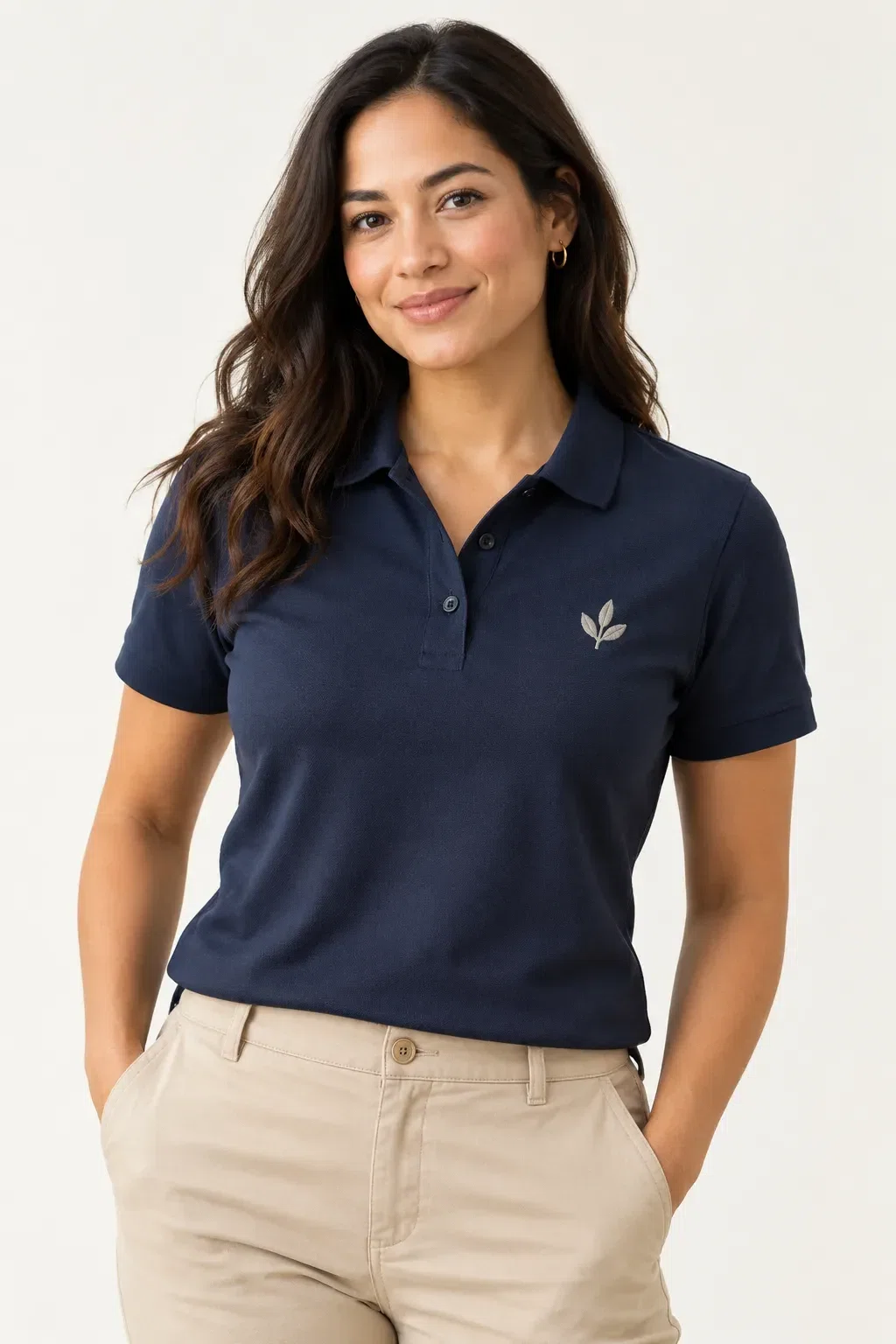
This method is worth pricing for repeated artwork across a team, especially when designs are larger or use a limited number of solid colours. It is not restricted to promotional clothing or short-term uniforms.
Durability depends on the ink system and production process. Avient's performance-wear printing guidance explains that under-curing can cause cracking and wash failures. It also identifies dye-migration issues when printing polyester, making garment and ink compatibility an important approval point.
What to check in a screen-printed sample
- Logo edges, colour registration and coverage on the chosen garment colour.
- Print feel and comfort at the final design size.
- Evidence that the selected ink and curing process suit the fabric.
- Appearance after washing under the agreed care conditions.
A cracked sample is a reason to investigate the system and process. It does not establish that every screen print is less durable than embroidery.
Heat press for uniforms: compare the transfer system, not just the machine
A heat press is application equipment, not one decoration material. Heat-applied uniform branding can include cut heat-transfer vinyl, direct-to-film transfers and screen-printed transfers. Their properties and care requirements differ.
Cut vinyl may suit straightforward names or shapes, while printed transfers can support more detailed artwork. Ask the supplier to identify the proposed system rather than accepting “heat press” as a complete specification.
Professional transfers should not automatically be described as temporary. For example, STAHLS' UltraColour MAX transfer guidance provides product-specific wash-test information and application requirements. Those claims concern that manufacturer's product; they do not establish the performance of an unspecified transfer or a Masswear Uniform garment.
What affects transfer durability?
Confirm fabric compatibility, application temperature, pressing time, pressure and the correct carrier-removal procedure for the selected product. Obtain its laundering instructions and discuss how the finished decoration behaves when the fabric stretches.
Transfers can be worth considering for changing employee names, detailed logos or smaller batches. Peeling, lifting or cracking can occur, but a blanket claim that heat press is always the least durable option is unsupported.
Which uniform logo method lasts longest in your workplace?
The practical recommendation is to compare decorated samples against your actual use conditions. Embroidery may be the preferred option for a small logo on a stable fabric; a print or transfer may suit a large design or detailed artwork better. Neither choice removes the need for approval checks.
Describe how uniforms will be used: domestic or commercial laundering, washing temperature, drying, ironing, cleaning chemicals and regular contact with straps or equipment. These details give the supplier a basis for proposing a suitable system.
Product guide
Compare print and transfer options
Discuss screen printing, heat-applied transfers, artwork placement and laundering requirements for your team.
Request a quote
Use the uniform materials guide to begin the fabric discussion, then evaluate decoration on the exact garment. A result achieved on a cotton sample should not be assumed to apply unchanged to a different fabric or finish.
For workwear with required protective performance, obtain approval for the garment and decoration combination. Adding a logo does not itself establish suitability for a protective role.
Cost vs longevity: compare the complete uniform order
There is no fixed rule that embroidery is always most expensive or transfers always cheapest. Logo size, detail, decoration locations, order volume and artwork changes affect the quotation.
Compare garment and decoration costs with design preparation, samples, delivery and likely reorder needs. Ask whether setup charges apply again and how employee names or departmental variations are priced.
For example, one repeated logo across a large order creates different production requirements from a different name on every garment. Price both requirements explicitly if your team needs them.
Long-term value also depends on garment life and care suitability. Avoid choosing from an unsupported “best return on investment” claim; compare the agreed specification, evidence and complete costs.
A sample-approval checklist for durable uniform branding
- Confirm the garment: style, fabric, colour and any surface finish.
- Identify the decoration: thread, ink or transfer system and relevant care limits.
- Approve the artwork: finished dimensions, colours, positions and lettering.
- Inspect a physical sample: assess appearance, comfort, backing or print feel.
- Agree wash checks: record conditions and acceptable changes before testing.
- Document approval: retain the sample reference, specification and artwork version for production and reorders.
A short wash trial can reveal problems, but it cannot prove an entire service life. Ask what any test result covers and whether its conditions match your laundering process.
Choose uniform decoration with Masswear Uniform
Choose embroidery for its stitched appearance where the garment and design support it. Consider screen printing for repeated graphics, and assess a specified transfer system for personalisation or detailed artwork. Make durability a question of compatibility and evidence rather than a fixed ranking.
Masswear Uniform manufactures to buyer-agreed requirements and provides free mockups before production. Minimum order quantities and estimated turnaround are confirmed in the quotation. Confirm physical sample arrangements separately from digital mockup approval.
To compare options for your team, request a uniform branding quotation with your logo, garment preferences, quantities, decoration positions and laundering requirements.
Frequently Asked Questions
Common questions related to this article.