
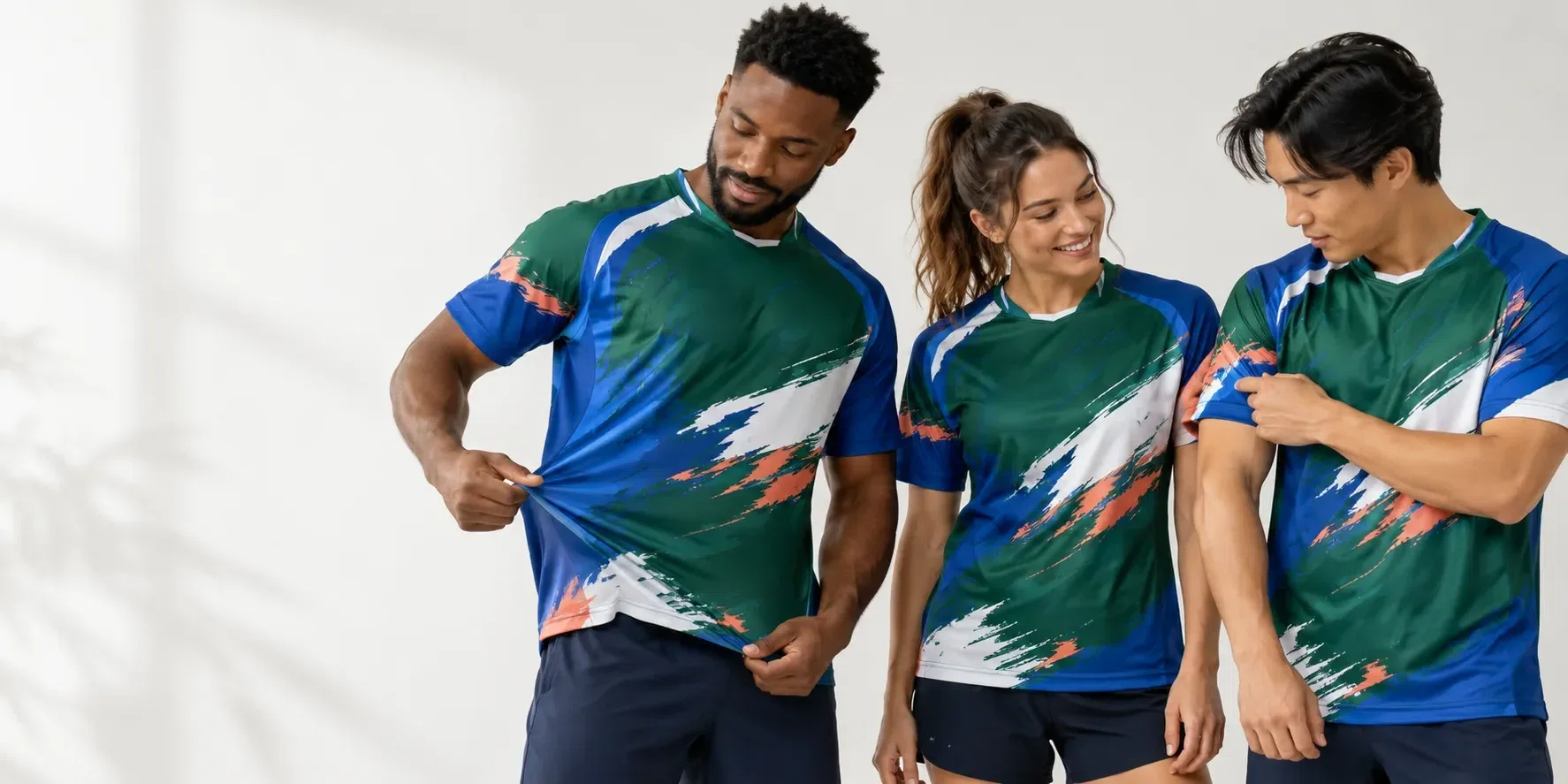
For custom jerseys, direct dye sublimation has a clear advantage against cracking and peeling: it does not create a separate surface ink film. That makes it a useful candidate for detailed designs on compatible polyester fabric. However, it does not prove that every sublimated jersey keeps its colour longer or lasts more seasons than every screen-printed alternative.
The useful buying question is what “lasts longer” means for your team. Colour change, print damage, fabric wear and replacement cost are different measures. This guide explains how to compare them before approving a uniform order.
How sublimation and screen printing differ
Conventional direct dye sublimation transfers dye into compatible polyester fibres using heat. Screen printing applies an ink system through a mesh stencil. The resulting feel and performance depend on the materials and production process.
Epson's sublimation guidance recommends white or light-coloured polyester substrates for conventional applications. Standard dye sublimation does not print white ink, so the starting fabric affects the finished colours.
A dark jersey design can be printed onto a light base. That differs from attempting to add pale artwork to an already dark garment. Ask which workflow the supplier proposes.
Screen printing includes different ink systems. Some form a noticeable film; others give a softer finish. Avient describes discharge inks for suitable garments, showing why all screen prints should not be treated as identical surface coatings.
Compare durability by the type of damage
| Concern | Direct sublimation | Screen printing |
|---|---|---|
| Cracking or peeling | No separate printed film to crack or lift. | Depends on the ink system, curing, fabric and use. |
| Colour change after washing | Needs evidence for the actual dye, fabric and process. | Needs evidence for the actual ink, fabric and process. |
| Sunlight exposure | Do not assume embedded dye is immune to fading. | Do not assume a surface print has a fixed outdoor lifespan. |
| Stretch and movement | Assess the fabric and any additional decoration. | Assess compatibility between the ink and garment movement. |
| Fabric wear | Printing method does not prevent abrasion or seam failure. | Printing method does not prevent abrasion or seam failure. |
Separate the appearance of the graphics from the condition of the jersey. A readable number does not compensate for worn fabric, damaged seams or an unsuitable fit.
Wash life: why a cycle count needs context
There is no universal wash count for sublimation, plastisol, water-based ink or other jersey decoration. A claim such as “100 washes” is incomplete without the tested garment, washing conditions and acceptance criteria.
Ask whether the number refers to actual laundering or an accelerated laboratory assessment. AATCC's accelerated colourfastness-to-laundering summary describes controlled conditions intended to approximate certain laundering effects. It does not establish a universal jersey service life.
For any report, request the method, conditions, specimen description, results and relevance to the proposed fabric and decoration. Confirm whether the test addresses colour change, staining, appearance or another property.
A small sample trial can reveal obvious problems under your laundry routine. It cannot prove several years of performance or replace a relevant laboratory assessment when contractual performance matters.
Product guide
Compare custom sublimated jerseys
Review artwork, polyester compatibility and sample checks before approving an integrated jersey design.
Request a quote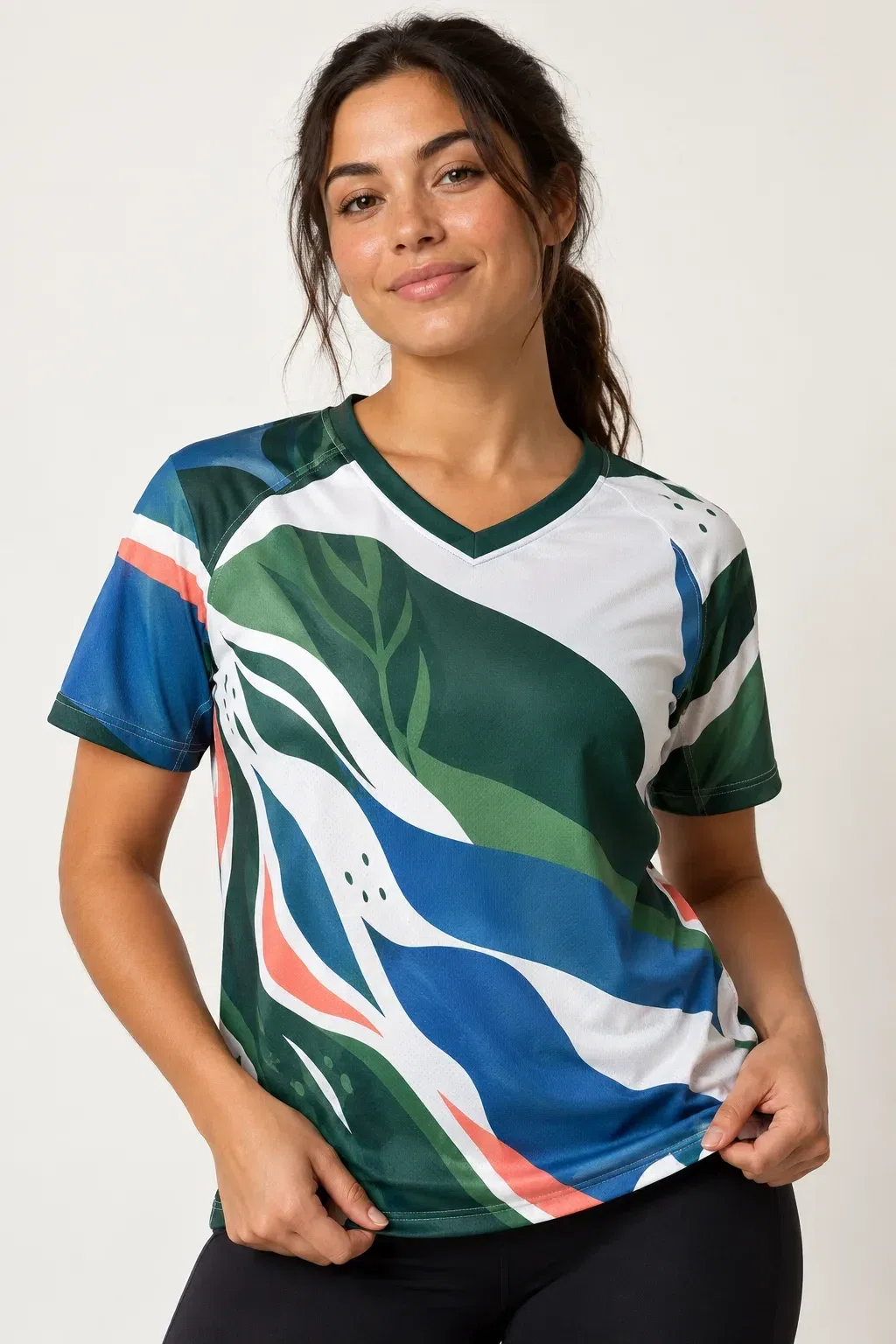
Sunlight resistance is a separate question
Colourfastness to washing and colourfastness to light are different properties. Evidence for one should not be presented as proof of the other.
AATCC publishes a separate light colourfastness test summary. It also explains that the relationship between test exposure and actual use needs to be determined and agreed.
For outdoor teams, ask about evidence relevant to sunlight exposure. Avoid converting a laboratory result into guaranteed seasons without a justified relationship to your conditions.
Epson cautions against long-term outdoor applications in its general sublimation guidance. That is a reason to ask specific questions, rather than a conclusion that a sublimated sports jersey is unsuitable for ordinary outdoor play.
Choose the method around fabric and artwork
Direct sublimation is worth shortlisting for compatible polyester jerseys with gradients, coordinated panels and integrated names or numbers. It does not automatically make the fabric breathable, moisture-wicking or lightweight.
Screen printing is worth comparing for repeated placement graphics on suitable garments, including cotton and some polyester fabrics. The supplier should specify the ink system rather than simply promising a durable print.
For polyester, dye migration can discolour printed areas. Avient's polyester printing guidance recommends pretesting and discusses ink selection and curing controls.
Whether you are buying basketball uniforms or soccer uniforms, compare proposed samples against the sport's movement, coverage and care needs. A suitable process on one fabric is not proof of suitability on another.
Names, numbers and transfers need their own assessment
A jersey can combine methods. For example, its base design may be sublimated while a later sponsor mark is added with a transfer. The complete garment then has more than one decoration system to assess.
Do not assume heat-transfer vinyl is always the least durable option or assign it a fixed wash count. Product selection, fabric compatibility, application and care all affect the result.
Likewise, direct-to-film and direct-to-garment printing are different processes. A description such as “digital printing” is too broad to establish performance.
Ask how each element will be produced, particularly variable player details and later additions. Confirm that the complete jersey has coherent care instructions.
Product guide
Plan screen-printed teamwear
Discuss garment choice, ink process, placement and care requirements for your team order.
Request a quote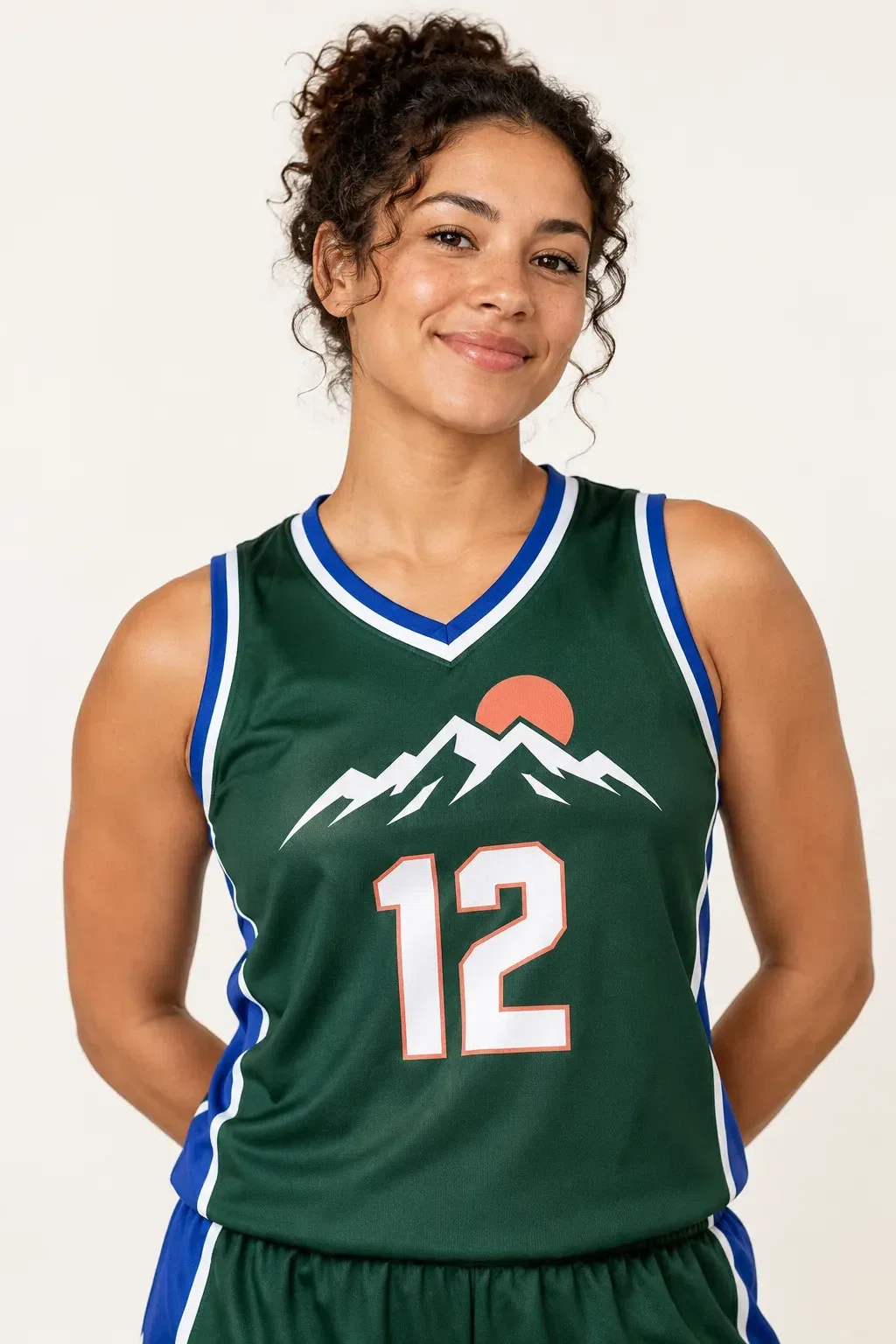
A practical sample assessment plan
- Record the specification: identify the fabric, decoration process, artwork and care instructions.
- Set acceptance criteria: agree what colour change, distortion or damage would be unacceptable.
- Keep a reference: retain an unwashed sample or suitable baseline record.
- Assess normal movement: check fit and printed areas during representative activity.
- Follow the agreed care process: record washing and drying conditions consistently.
- Review the results: compare colour, numbers, edges, seams and fabric condition.
Use the same evaluation criteria for competing proposals. Do not invent severe stretching or laundry conditions that conflict with the garment's intended use, then treat the result as normal service performance.
A digital mockup supports layout approval. Arrange a physical sample separately when feel, fit or performance needs assessment.
Compare replacement costs as well as the initial quote
A team order should include garment cost, decoration, personalisation, samples and delivery. Ask about small reorders, artwork retention and material substitutions.
For a hypothetical club, a detailed sublimated match jersey and a simple screen-printed training shirt might serve different needs. Evaluate each against its intended use rather than forcing one method across the programme.
There is no defensible universal promise of three seasons, five years or a particular cost per season without relevant evidence. Record actual replacement reasons so later purchasing decisions can use your team's experience.
Prepare your jersey enquiry
Direct sublimation removes the surface-film failure mechanism associated with some decorations. Overall longevity still needs assessment of colourfastness, fabric, construction and care. Choose from relevant evidence and approved samples.
For a wider team sportswear programme, document the intended use and performance criteria for each garment.
To discuss your requirements with Masswear Uniform, request a team jersey quote with garment types, quantities, artwork, player details, care conditions and the required delivery date. Identify any durability evidence or sample assessment your organisation needs.
Masswear Uniform provides free mockups before production. Minimum order and estimated turnaround are confirmed with the quote. Confirm the proposed material, decoration method and physical sample arrangements before approving production.
Frequently Asked Questions
Common questions related to this article.