
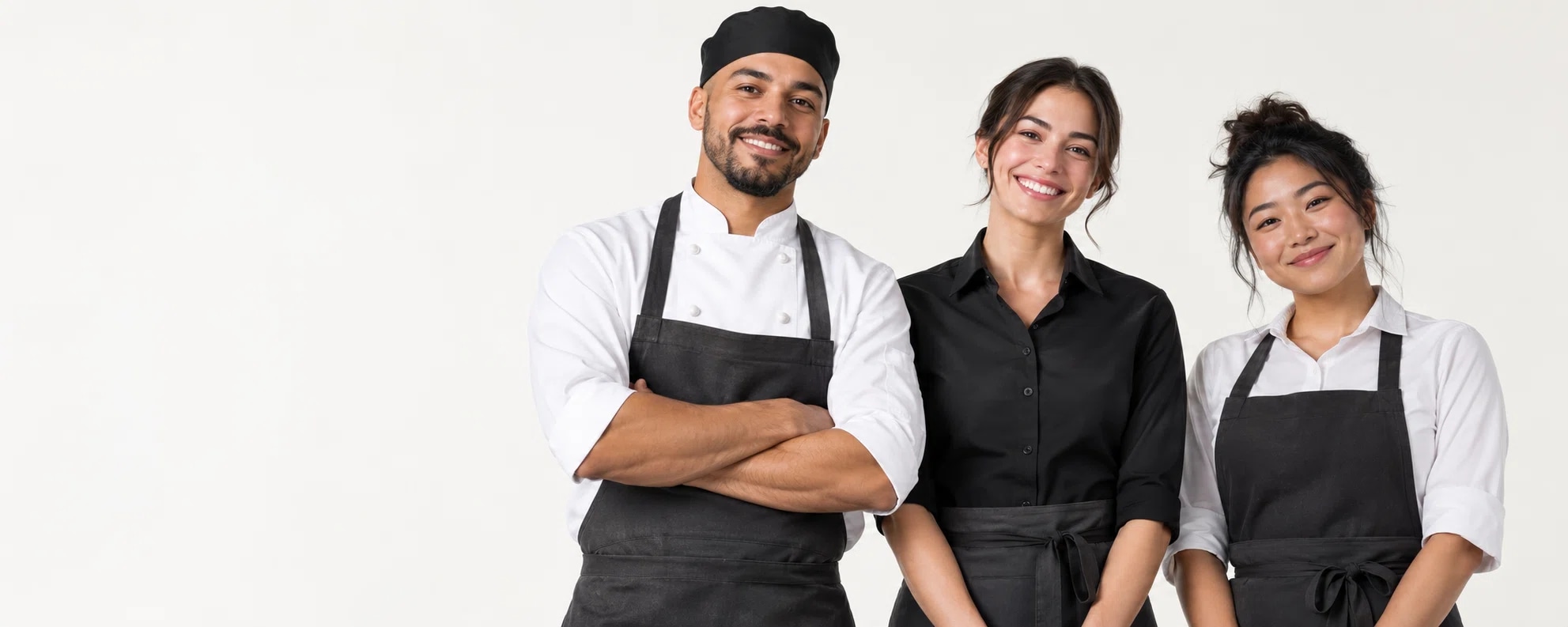
The best uniforms for restaurants and cafés are the ones that suit the work, follow your hygiene procedures and fit the people wearing them. A polished shirt may suit table service, while a barista needs clothing that works at the counter and a chef needs garments selected for kitchen tasks.
Build a role-based brief before choosing colours or logos. This helps you compare samples and quotations without assuming one fabric or outfit will work for everyone. The guide below covers chefs, servers, baristas, aprons and the practical checks to make before ordering.
Start with roles, tasks and hygiene procedures
List the duties each team performs during a normal shift. Include food preparation, customer service, clearing tables and any cleaning responsibilities. Staff who move between tasks may need different changing or apron arrangements.
Use your food-safety procedures and applicable local requirements as the starting point. The UK government's personal hygiene guidance calls for suitable, clean, protective clothing in food-handling areas. This is guidance for its jurisdiction, not proof that a particular uniform meets every requirement worldwide.
Agree how clean clothing will be available and what staff should do when garments become soiled. Branding and colour choices should fit those arrangements.
| Role | Clothing to assess | Key checks |
|---|---|---|
| Chef or kitchen team | Kitchen jacket or top, trousers and task-appropriate apron. | Movement, closures, care and required safety controls. |
| Server or host | Shirt or polo with coordinated trousers and any apron. | Reach, presentation, pocket needs and fit. |
| Barista | Suitable top, trousers and apron. | Counter work, bending, strap comfort and cleaning. |
| Supervisor | A coordinated variation of the service uniform. | Clear identification and practical role requirements. |
These are options to evaluate, not mandatory outfits or confirmation of supplier availability.
Chef uniforms: assess the kitchen task before the fabric
Kitchen clothing needs to work during reaching, bending and movement around equipment. Check sleeve length, fastenings and fit against the duties and workplace procedures.
An ordinary chef jacket is not evidence of protection against burns. Do not assume that a thick or double-breasted garment is heat-resistant. Any required protective performance should be selected through the workplace assessment and supported by appropriate evidence.
The UK HSE's catering guidance on harmful substances explains that some tasks may need protective gloves, aprons or eye protection. General uniform selection does not replace task-specific controls.
For hot kitchens, assess fabric weight, construction, garment fit and working conditions together. A fibre label alone cannot tell you whether staff will remain comfortable. Ask kitchen employees to trial the proposed garments during representative tasks.
Server uniforms: balance presentation with movement
Front-of-house clothing should suit the service style without restricting routine work. Compare how samples feel while carrying permitted items, reaching across a table and sitting during breaks.
Button-down shirts may be worth considering for a more formal appearance. Polo shirts offer another option for a coordinated service outfit. Assess the proposed fabric, cut and care requirements rather than choosing solely from a photograph.
Check pockets against what staff actually need to carry. A useful pocket arrangement should remain comfortable and presentable when loaded with permitted items.
Product guide
Plan chef and kitchen uniforms
Compare kitchen garments, apron requirements and sample checks for your back-of-house team.
Request a quote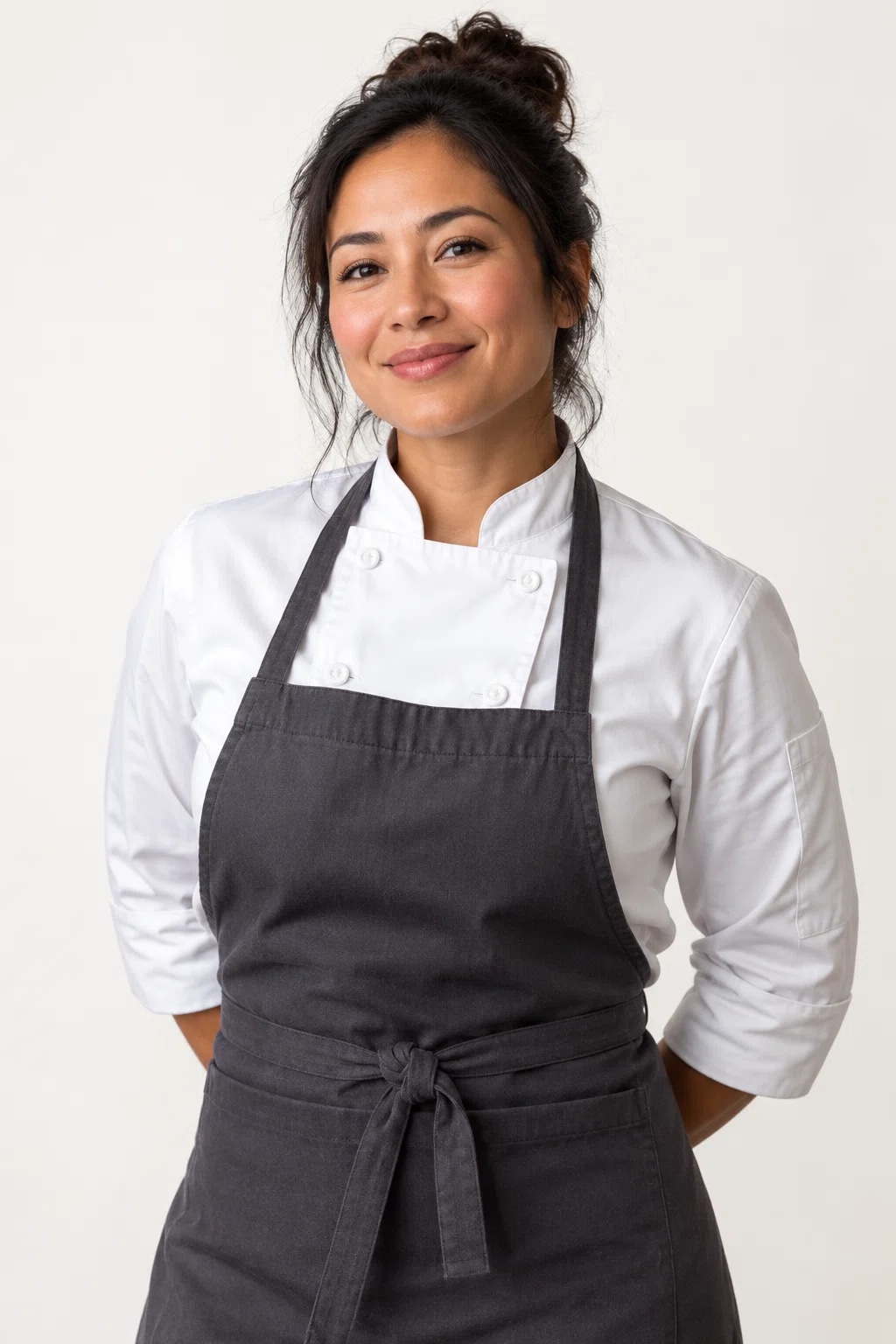
Uniforms can provide visual consistency and help identify staff. They do not automatically increase productivity, customer trust or sales. Choose the design around your service needs and obtain wearer feedback.
Barista uniforms: test the outfit at the counter
Baristas often alternate between drink preparation, serving and cleaning. Review the outfit across those tasks rather than selecting it only for the café's aesthetic.
Check whether sleeves, apron ties or loose details interfere with the normal work setup. Assess bending and reaching with the apron over the intended top, and check comfort during repeated movement.
A casual look can still use a controlled colour palette and approved logo. However, denim, cotton or a particular style is not automatically the best choice. Confirm that the proposed material and garment follow your hygiene and laundry arrangements.
For a hypothetical café, the team might shortlist one base outfit with separate approved aprons for defined tasks. The manager would then assess the arrangement against workflow and cleaning procedures before ordering.
Aprons: compare coverage, fit and cleaning
An apron can help shield the underlying clothing from routine soil, but it does not establish protection against hot liquids, chemicals or other hazards. Identify any protective requirement separately.
Compare bib and waist styles according to the task. Check coverage, length, straps, fastening and pocket access on representative wearers. Review the apron over the actual uniform rather than in isolation.
Ask how the fabric, straps, buckles and logo will tolerate the intended cleaning process. Specify how aprons will be changed, stored and replaced under your procedures.
Confirm any proposed apron design with the supplier. Do not assume a particular fabric, finish or adjustment range is available simply because it appears in a style reference.
Choose fabrics and colours from actual samples
Cotton, polyester and blends can each be candidates. Compare composition, weight, construction, surface feel and care instructions rather than ranking them from fibre content alone.
Dimensional stability also depends on more than the material name. CottonWorks identifies yarn, construction, processing, finishing and garment care among the factors affecting shrinkage performance.
Ask what supports any stain-release, wrinkle-resistance or other performance claim. “Easy-care” should describe a process your business can actually follow.
Darker colours may make some marks less noticeable, but they do not make fabric stain-resistant or clean. Compare brand colours on the real materials and check the appearance of mixed garments together.
Assess samples under your venue's lighting. Keep an approved reference so future orders have a clear colour and appearance target.
Product guide
Coordinate server and barista uniforms
Build a practical service outfit around movement, fit, branding and laundry arrangements.
Request a quote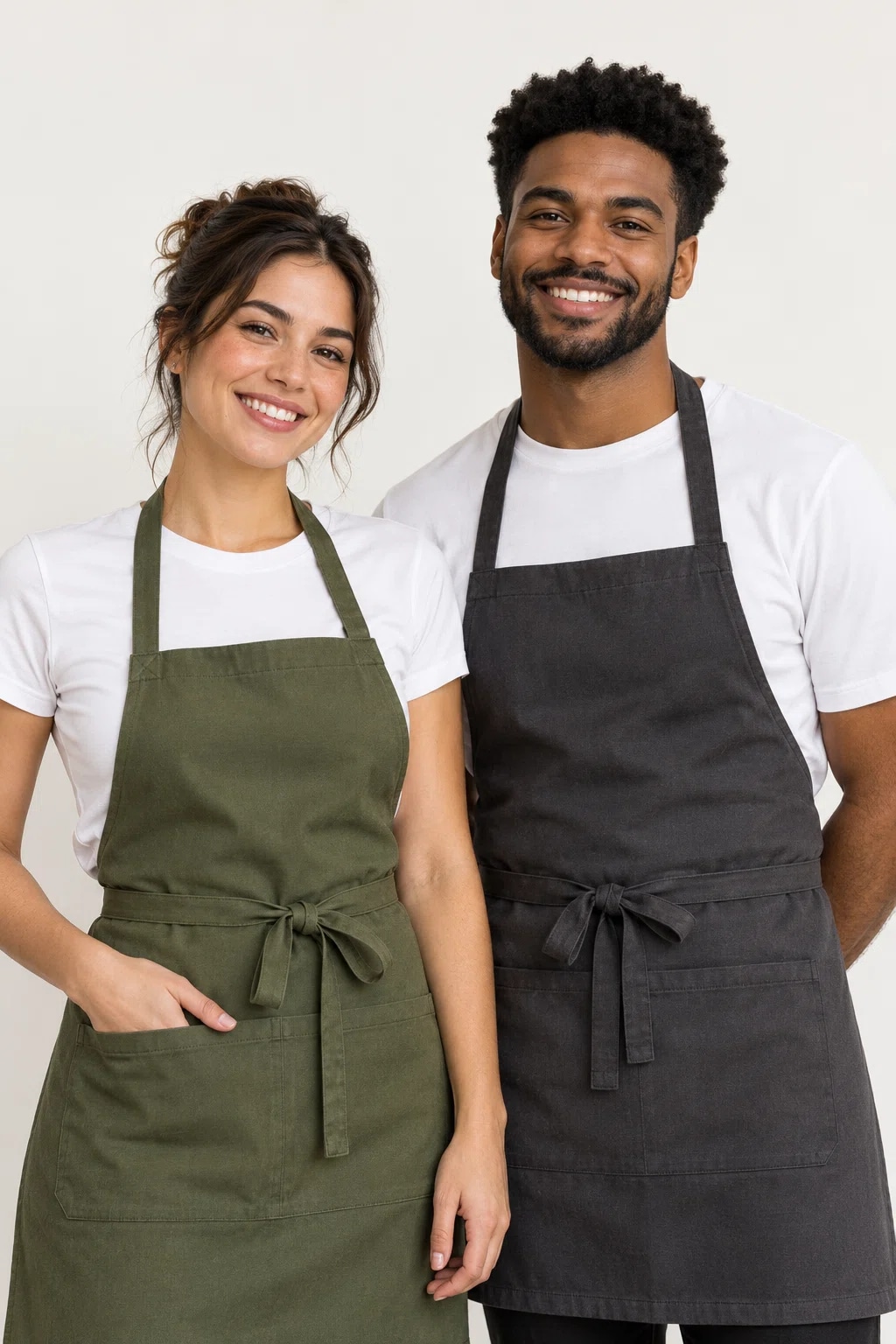
Approve branding alongside care and fit
Embroidery and printing can both be considered, depending on the design, material and care process. Neither method guarantees longer life or lower cost in every application.
For logo embroidery, assess the finished lettering, fabric distortion and reverse-side feel. For printing, ask which process is proposed and why it suits the garment.
Check logo placement with the apron and any normal layers worn. A logo on the base shirt may be hidden throughout service, making an additional placement unnecessary or a different location more useful.
Approve the finished dimensions, colours and position. A digital mockup supports layout decisions, while a physical sample is needed to assess feel, fit and decoration appearance.
Compare total costs and plan replacements
Send suppliers the same role-based brief. Ask quotations to separate garment cost, decoration, artwork preparation, samples, delivery and applicable taxes.
Calculate quantities using staffing, shifts and laundry turnaround. Include your arrangements for changing soiled garments, spare stock and new starters rather than choosing a universal number of pieces per employee.
Check the complete sample after the agreed care process. Review fit, seams, colour and logo condition. Follow approved garment instructions and your hygiene procedures rather than a generic rule to avoid all strong detergents.
Ask about repeat-order minimums, estimated schedules and material changes. A low initial price is not enough to establish better value if replacements or cleaning arrangements do not suit the business.
Restaurant uniform approval checklist
- Role: document duties, hygiene requirements and any protective needs.
- Garments: approve the outfit and apron together.
- Fit: review representative sizes during normal movement.
- Care: confirm cleaning compatibility and changing arrangements.
- Branding: approve artwork, colours and placement.
- Supply: confirm quantities, the quote and replacement arrangements.
Prepare your restaurant or café uniform enquiry
Choose the outfit from the role requirements, sample review and complete quotation. A consistent appearance works best when the garments are also practical for daily service.
To discuss your requirements with Masswear Uniform, request a restaurant staff uniform quote with garment types, quantities, fit needs, approved artwork, laundry conditions and the required delivery date. Include any apron or kitchen clothing requirements for the supplier to assess.
Masswear Uniform manufactures to the buyer's agreed requirements and provides free mockups before production. Minimum order and estimated turnaround are confirmed with the quote. Confirm the proposed garment options and physical sample arrangements before approving production.
Frequently Asked Questions
Common questions related to this article.