

To order custom uniforms for your business, define what each role needs, select garments and decoration, collect sizes, request a detailed quotation and approve the agreed specification before production. Finish by checking delivery and keeping records for reorders.
A clear brief connects your brand identity with practical needs such as movement, pockets, laundering and staff identification. This guide explains eight steps for ordering business uniforms, from an initial requirement list to issuing garments to your team.
Step 1: Define your business uniform requirements
Start with the people wearing the uniform. List job roles, work locations, shift patterns and tasks. A receptionist, kitchen worker and field technician may need different garments even when they share the same brand colours.
Separate essential requirements from preferences. Record the movement, coverage, storage and cleaning needs for each role, then choose suitable garment types from the uniform product range. Decide who will approve the order and manage employee feedback.
- Role and setting: customer-facing, office, kitchen, clinical or outdoor work.
- Garment requirements: shirts, polos, trousers, aprons, scrubs or other agreed items.
- Brand requirements: colours, logo positions and staff identification.
- Operational requirements: budget, delivery location and date uniforms must be ready to wear.
If a role requires protective clothing, include the applicable requirements and evidence in the brief. A branded uniform alone does not establish protective performance.
Step 2: Choose fabric and a compatible decoration method
Review uniform material options against the job and laundering routine. Ask for fibre composition, fabric weight, construction, available colours and care instructions. Evaluate the actual garment rather than deciding from a fibre name alone.
Dimensional stability matters when garments are washed repeatedly. CottonWorks explains that shrinkage depends on construction, processing, finishing and garment care, among other factors. Use its shrinkage and skewing guidance to frame questions about washing performance and agreed acceptance criteria.
Choose the branding method alongside the garment. Ask the supplier to assess your logo at its intended size on the proposed fabric.
- Embroidery: request a stitched sample to assess lettering, detail and the surrounding fabric.
- Screen printing: ask how colour count, print locations and order quantity affect the quotation.
- Heat-applied transfers: confirm the transfer system, fabric compatibility and care requirements.
For embroidered branding, review custom corporate logo embroidery and discuss which details need adjustment for the finished garment.
Step 3: Prepare logo artwork and the uniform design brief
Send the clearest available logo file and ask which formats the supplier accepts. Provide your brand colour references, intended decoration dimensions and position on each garment. Include names, job titles or department labels if required.
Use one design sheet per garment style. Specify the garment colour, logo version, front and back decoration, and any differences between departments. Check spelling and capitalisation against an approved staff roster.
Product guide
Plan your business uniform order
Share roles, garment requirements, quantities and artwork so your supplier brief is ready for comparison.
Request a quote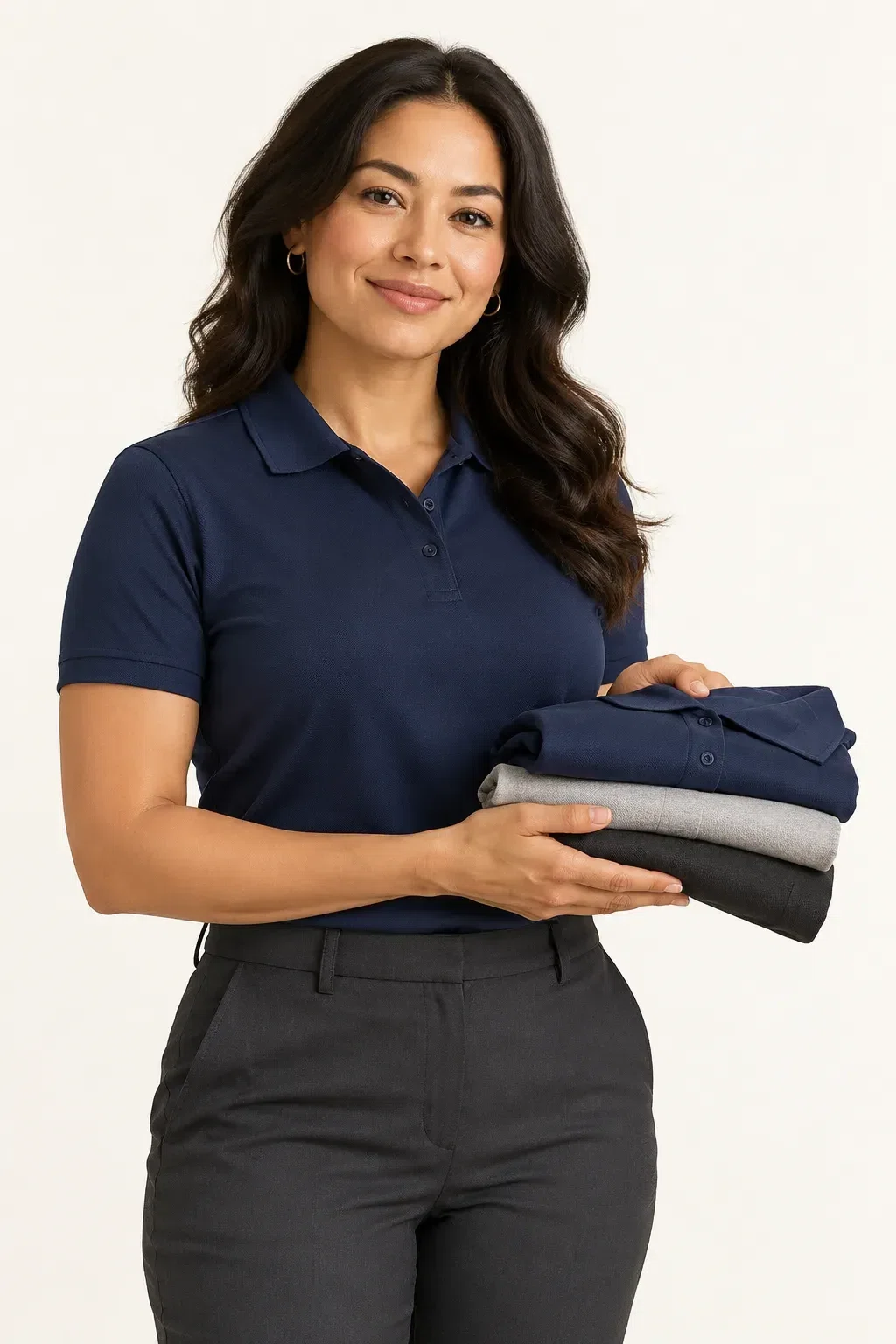
A digital mockup helps review layout, but it cannot establish physical fit, fabric feel or the appearance of a stitched or printed sample. Keep these approval decisions separate and give every revision a clear version number.
Step 4: Collect employee sizes and calculate quantities
Use the size chart for the exact garment being ordered. Confirm whether it lists body measurements or finished garment measurements, and follow its measuring instructions. Do not assume that the same size label fits identically across styles.
Where available, arrange a fitting session or trial garments. Ask employees to check reaching, bending, sitting and any layers they normally wear. Record the selected size for each garment separately.
Calculate quantities from the number of wearers and the allocation per person, then add approved spare stock. Base that allocation on shift frequency and washing arrangements. Include expected new starters rather than adding an unexplained percentage.
Create an order matrix showing garment style, colour, size, quantity and personalisation. For example, 20 employees receiving three shirts each require 60 shirts before spares. This is a planning example, not a minimum order requirement.
Step 5: Request and compare itemised supplier quotations
Send the same brief, artwork and order matrix to each supplier. Comparable quotations make it easier to assess what is included and resolve omissions before ordering.
Ask for written confirmation of garment costs, decoration, artwork preparation, samples, packaging, delivery charges and applicable taxes. Check payment terms, minimum order quantities, change deadlines and how order discrepancies are handled.
Discuss the required arrival date, including time for artwork revisions, sample approval, production and shipping. Confirm what starts the quoted lead time and which approvals or payments must be completed first.
With Masswear Uniform, minimum order quantities and estimated turnaround are confirmed in the quotation. Garments are manufactured to buyer-agreed requirements; make those requirements specific enough to compare against the delivered order.
Step 6: Approve samples and the final production specification
Agree which approvals are needed: a digital artwork proof, an undecorated fit sample, a decoration sample or a complete pre-production garment. Confirm sample costs and whether the sample represents the proposed production materials and construction.
Inspect fit, seams, closures, pockets, fabric feel and logo appearance. If wash trials are agreed, follow the proposed care instructions and record the results. A short trial can identify issues but does not prove the garment's entire service life.
Before authorising production, approve the final garment specification, artwork version, size breakdown, personalisation roster, quantities and commercial terms. Nominate one authorised approver and obtain written confirmation of any changes.
Masswear Uniform provides free mockups before production and a dedicated production manager. Use the mockup stage to resolve layout details, while confirming separately whether physical samples are required.
Product guide
Approve samples with confidence
Review fit, fabric, decoration and the final production specification before placing your team order.
Request a quote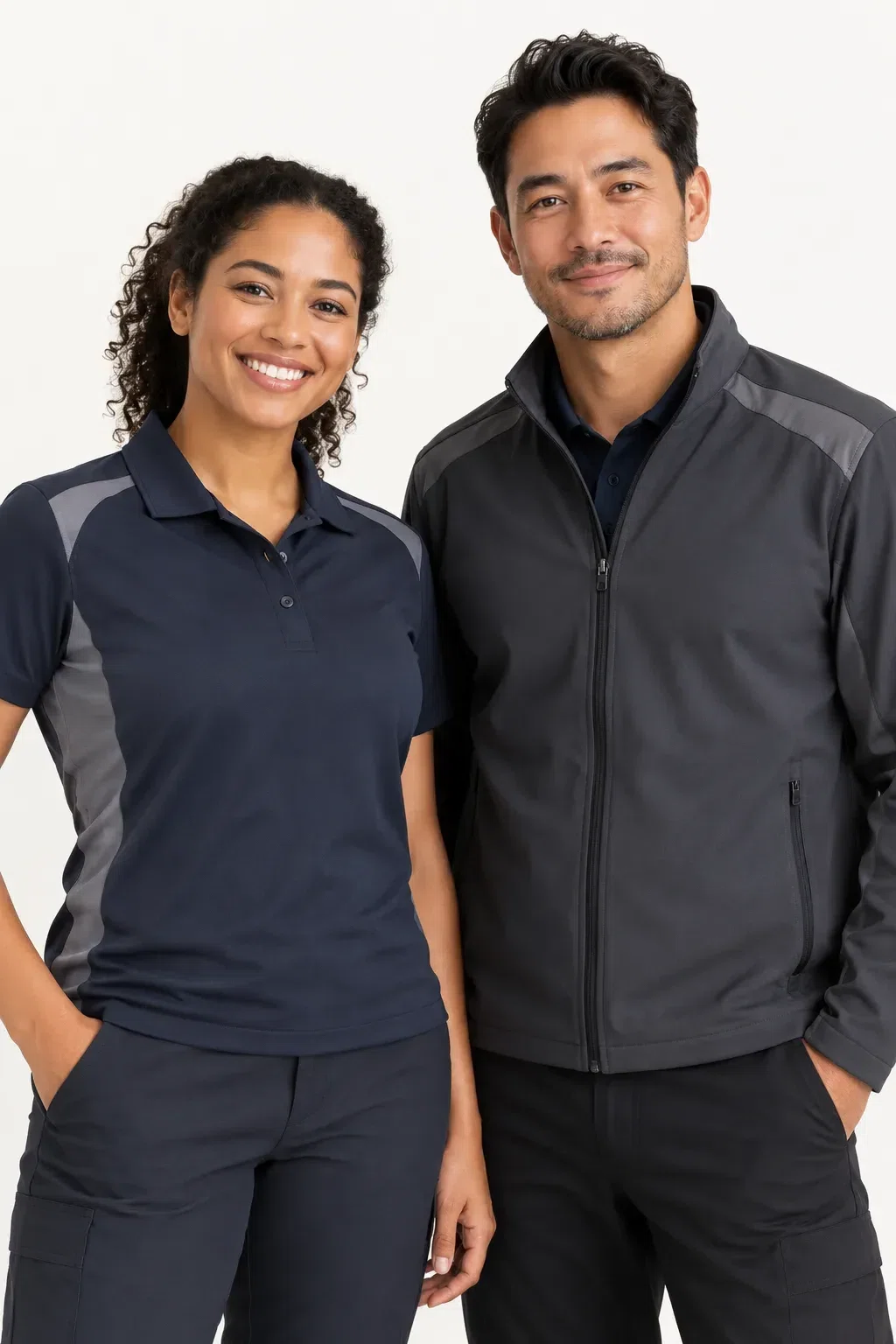
Step 7: Check delivery and distribute staff uniforms
Agree the delivery address, contact person and packing arrangements before dispatch. Confirm whether garments will be grouped by employee, department or size, and who will handle receipt.
On arrival, compare the shipment with the approved order matrix and packing list. Check quantities, sizes, colours, personalisation and visible workmanship. Record discrepancies with photographs and notify the supplier within the agreed reporting period.
Distribute uniforms using the staff roster and record what each employee receives. Resolve missing items or incorrect allocations before the planned launch date wherever possible.
Step 8: Plan garment care, spare stock and reorders
Give employees the supplier's care instructions for both the garment and decoration. For centrally managed laundering, confirm that the proposed garments suit that process before purchase.
Retain garment references, fabric specifications, colour references, approved artwork, size charts and previous quantities. Keep a record of spare stock so new starters and replacement needs can be handled consistently.
Before reordering, confirm current availability, pricing, minimum quantities and lead times. Ask the supplier to flag substitutions and approve any changes to fabric, fit, colour or decoration.
What should you send with a custom uniform quote request?
- Business name, contact person and delivery location.
- Job roles, garment types and essential work requirements.
- Preferred fabrics, colours and laundering arrangements.
- Logo files, decoration positions and personalisation details.
- Quantities by style, colour and size, or an initial wearer estimate.
- Budget range, required arrival date and sample requirements.
If sizes or specifications are still being confirmed, label them as provisional and ask what information is needed for a final quotation.
Start your business uniform order with a clear brief
A successful custom uniform order depends on clear requirements and documented approvals. Define the garments, confirm fit and branding, compare complete quotations and keep the approved specification available for delivery checks and reorders.
Ready to discuss your team's requirements? Request a custom uniform quotation from Masswear Uniform with your garment preferences, estimated quantities, artwork and required delivery date.
Frequently Asked Questions
Common questions related to this article.